 By Brandon Willoughby
Everyone who's ever asked about Thailand timing has heard the same answer: "Any time is a good time!" That's the kind of advice that comes from people who either haven't been, or who stayed in an air-conditioned resort and wouldn't have noticed a monsoon if it came through the lobby. Let's be honest about it.
There's a clear best window. There's a "you'll survive but it won't be peak" middle period. And there's a stretch where cancelled boat trips, sweating through your shirt before 9am, and watching a flood close your street are genuine possibilities.
"I've been to Thailand in every season. Only once did I have to cancel a day of island-hopping because of weather. That was July. The November trip was the best two weeks of my year."
The Best Time: November to February
This is the dry season across most of Thailand - cool mornings, low humidity, and the kind of blue-sky days that make every photo look like it was edited. Temperatures run 25–30°C in the daytime, which feels cool by Thai standards. The islands are fully operational. The temples are easy to walk around. Bangkok doesn't feel like a sauna.
December and January are peak tourist months, which means higher prices and more crowds at the popular spots. If you want the weather without the peak pricing, November and February are the sweet spots. Fewer people, same weather, sometimes better prices.
Book accommodation 2–3 months ahead for December–January. For November or February, a few weeks in advance is usually fine outside of New Year's Eve.
The Middle Ground: March to May
This is where honest advice diverges. March is still good - you're catching the tail end of dry season and prices are dropping. April and May are when it gets genuinely hot. Bangkok in April hits 38–40°C with humidity that makes the heat index feel closer to 45°C. Songkran (Thai New Year) falls in mid-April - it's an extraordinary cultural experience, but the water festival means you'll be soaked, crowds are enormous, and transport can be chaotic.
If you're going for the experience of Thailand rather than ideal beach weather, March–May is workable. If you need to be comfortable walking around in the midday heat, wait.
The Rainy Season: June to October
Let's call this what it is: the monsoon. It doesn't rain all day every day - usually it's an afternoon downpour that clears within an hour. But the southwest monsoon hits the Andaman Coast (Krabi, Phuket, Koh Phi Phi) hard from May through October. Boats are cancelled frequently. Some smaller islands close entirely. The Gulf Coast (Koh Samui, Koh Phangan) has its own wet season that peaks September–November - so if Samui is on the list, timing matters differently.

Rainy season Thailand - the landscape is lush, but plan around the weather.
That said: there are reasons to go in the wet season. Prices drop significantly - sometimes 30–40% on accommodation. Crowds thin dramatically. The countryside is strikingly green. Chiang Mai and Bangkok are less affected by the rain than the islands. If your trip is city-heavy and you're budget-conscious, June–August isn't a bad call.
"The mistake isn't going to Thailand in the wet season. The mistake is going to the wrong part of Thailand in the wet season."
The Regional Breakdown That Actually Matters
Thailand isn't one climate. The country is long and the monsoon hits different coasts at different times. Here's the short version:
Bangkok and the north (Chiang Mai): Best November–February. Avoid April for heat. June–September is manageable - rain is afternoon-only, mornings are usually fine.
Andaman Coast (Krabi, Phuket, Koh Lanta): Best November–April. Avoid May–October - this is where the southwest monsoon is harshest and boat cancellations are common.
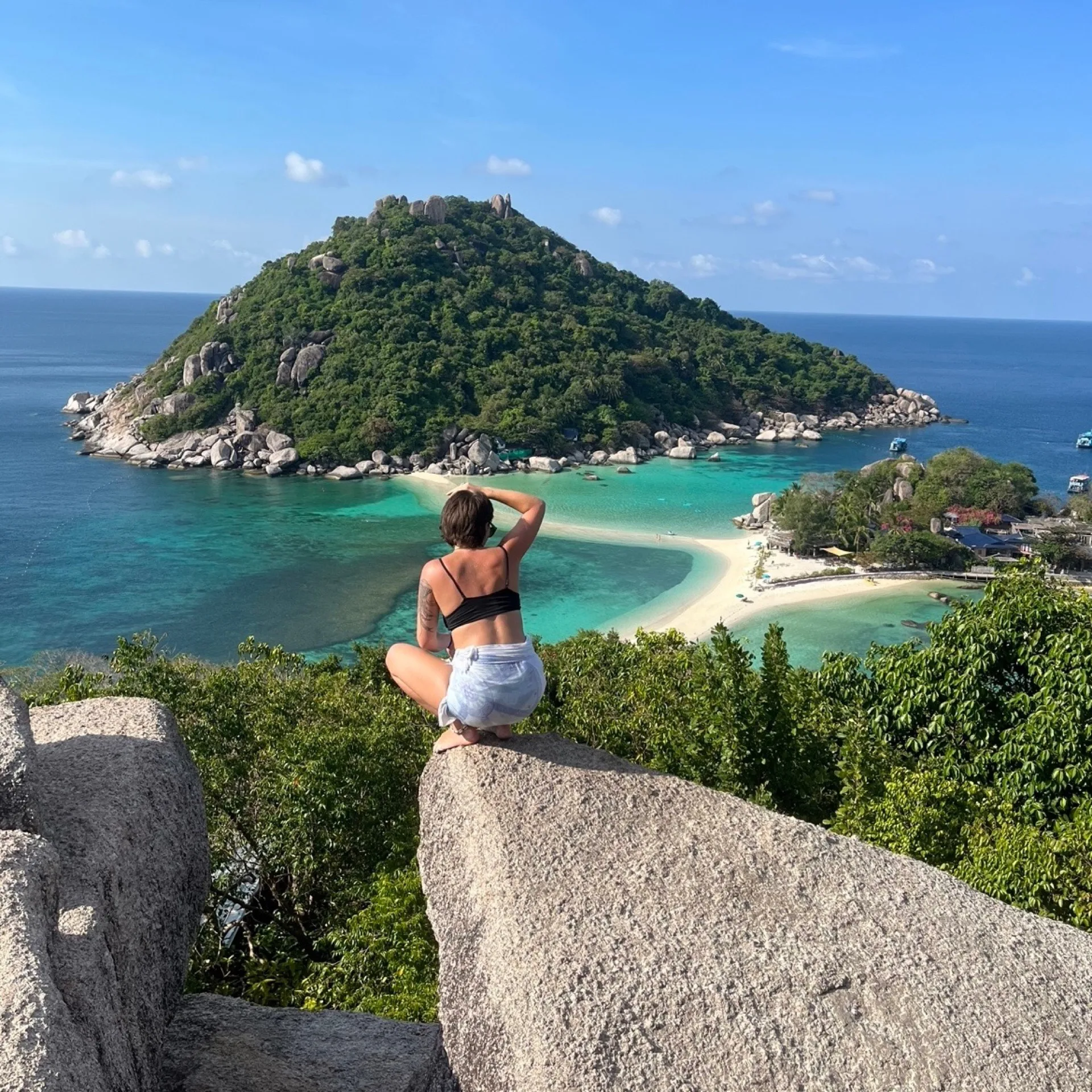
Gulf Coast (Koh Samui, Koh Phangan, Koh Tao): Best February–August. The northeast monsoon means October–December can be rough here, even when the Andaman side is calm. Koh Tao is more sheltered and generally good year-round.
Visa guides, packing lists, budget tools, and booking resources - everything you need to go from inspired to booked.
Go to the Resources page →Our Honest Recommendation
If you have flexibility: November or February. You get dry-season weather without the peak-season premium or the December crowd. Both months are excellent across Bangkok, the north, and the islands.
If December–January is the only time you can go: go. It'll be busier and more expensive, but it's genuinely a great time to visit. Just book early.
If you're going in the wet season: stay off the Andaman islands in June–October. Pivot to Bangkok, Chiang Mai, or the Gulf islands instead. The country is still very much open and very much worth going to - just route your itinerary around the weather.